Romero vs Lopez
Teofimo Lopez survived a bloodied, unsteady fifth round to take Rolando Romero’s WBA welterweight title. In Las Vegas, the challenger’s sustained work outlasted the champion’s most dangerous burst.
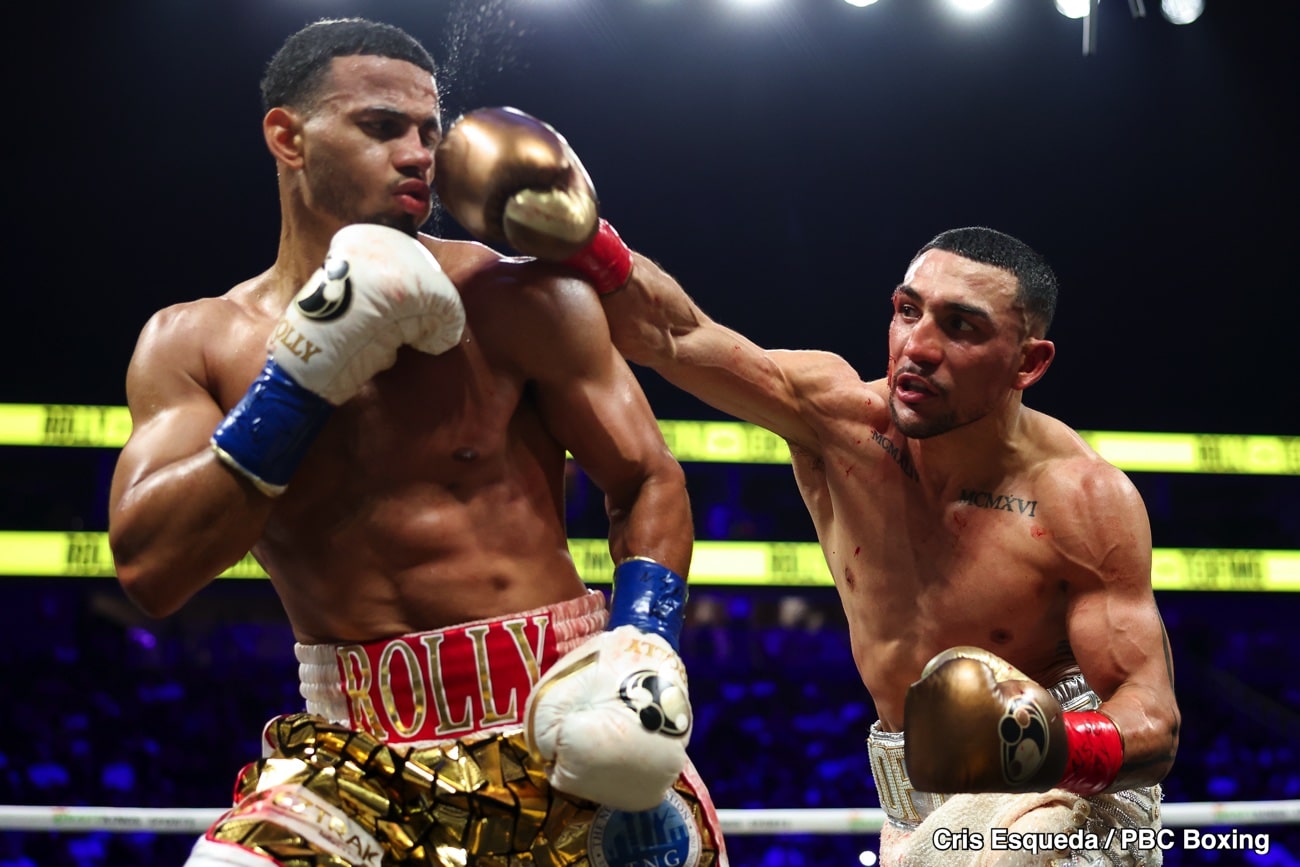
Rolando Romero had the belt, the hometown support and a friend across the ring who wanted what he held. At T-Mobile Arena in Las Vegas on August 22, Teofimo Lopez arrived seeking a world title in a third weight division, seven months after losing his junior-welterweight crown to Shakur Stevenson. Romero was making his first defence of the WBA welterweight championship. Their years of friendship and sparring gave the meeting familiarity, but the stakes were immediate: a chance for Lopez to rebuild his standing at 147 pounds, and for Romero to establish himself as more than a short-term champion.
Lopez built his challenge around the jab, working to the body and looking for the straight right rather than allowing the contest to become a succession of power exchanges. Romero’s threat was different: the long left hook, heavy enough to punish an incautious entry. There were quiet stretches, with the challenger supplying more of the activity and the champion waiting for something he could hit hard. Lopez was doing the steadier work, but every advance carried a risk. In the fifth, Romero made that risk painfully visible.
The champion’s left hook caught Lopez and opened a significant cut above his right eye. A following right hand rocked him badly, bringing him close to the canvas and sending the crowd into full voice. Romero opened up with Lopez in trouble in the corner, blood running from the damaged eye. This was the champion’s opportunity to turn an uneven night into his own: his power had interrupted Lopez’s rhythm and left the challenger fighting to get through the round. But Lopez kept his balance, no knockdown was awarded, and he reached the bell with his title challenge still intact.
Romero did not sustain the attack. Instead, he resumed waiting for the left hook, while Lopez recovered the initiative through the same practical work that had served him before the crisis. The jab kept Romero occupied; combinations and body punches gave the challenger more to show for the passing minutes. Lopez followed him around the ring, making the champion respond rather than letting him set the terms. The cut remained the visible mark of Romero’s success, but the fight was moving away from him. His supporters had been given a spectacular fifth round and little comparable to celebrate afterward.
By the tenth, Lopez was finding the right hand repeatedly. In the eleventh, a straight right briefly staggered Romero, yet the champion still failed to produce the urgency his position demanded. Lopez continued to dictate the work through the twelfth and heard a majority decision in his favour: 116-112 and 115-113, with the remaining judge returning 114-114. Those margins made the verdict tighter than the sustained pattern of the fight had suggested. Romero had delivered its most alarming passage; Lopez had supplied the more consistent boxing and left with the championship.
The victory lifted Lopez to 23-2 with 13 knockouts and made him a three-weight world champion. His attention quickly moved toward unification, with IBF champion Liam Paro and the winner of Ryan Garcia’s forthcoming WBC defence against Conor Benn among his preferred options, rather than Jack Catterall. Romero, now 17-3 with 13 knockouts, wanted another meeting. He disputed the scoring, pointed to the hurt he had inflicted and insisted he deserved a rematch. His frustration rested on a real opening in the fifth, but also on what followed: after bringing Lopez so close to the floor, he allowed the challenger to recover and take the belt round by round.