Odel Kamara
Liverpool’s Odel Kamara enters the professional ranks with world championship bronze and evidence of genuine punching impact. At 22, the super-welterweight prospect has earned attention—but his development needs to outlast the excitement.
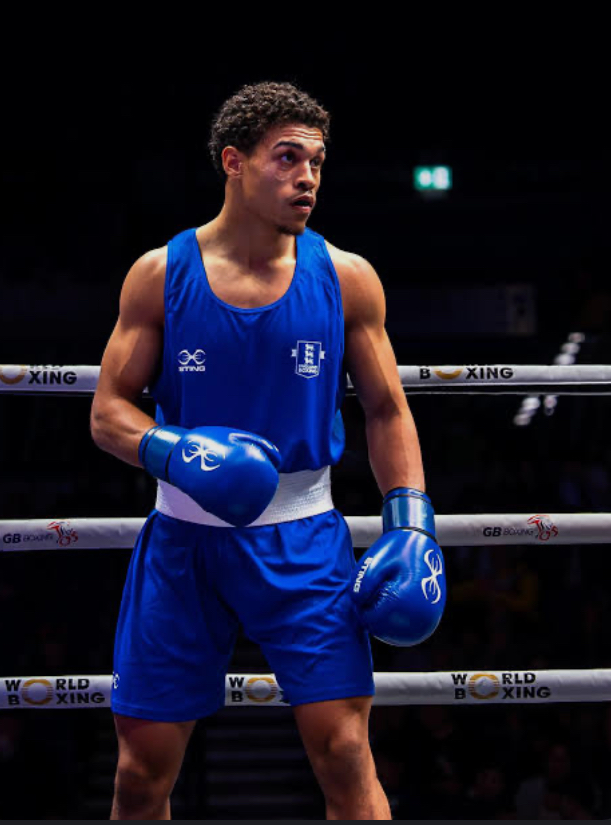
Odel Kamara arrives in professional boxing with a hometown medal behind him and the harder business of building a career ahead. The 22-year-old Liverpool super-welterweight left the GB Boxing programme in June, joined manager Sam Jones and signed with Eddie Hearn’s Matchroom Boxing in August. Tony Sims will train him in Essex. It is a substantial team for a new professional, but Kamara has done more than attract influential backers: his work at Salisbury Amateur Boxing Club brought seven national titles, including the Senior Elite Championship, before his international results gave those domestic achievements greater weight.
The breakthrough came in 2024. Gold at the Dacal Memorial World Cup was followed by the 71kg title at the World Boxing Cup Finals in Sheffield, where Kamara beat Japan’s Sewon Okazawa by unanimous decision. That victory is an important part of his pedigree. The spectacular moments would come later, but Sheffield established that he could win a final against accomplished international opposition and persuade every judge. His progression through the GB programme gave him experience beyond the domestic circuit, a useful foundation for a professional career in which opponents will present increasingly different problems.
Liverpool then provided the stage for his most significant tournament in 2025. Kamara opened his World Championships campaign at 70kg by forcing Kosovo’s Shpetim Bajoku to take three standing eight counts, winning unanimously. Against Canada’s Kuwardeep Manu in the last 16, the impact came almost with the opening bell: Manu was on the canvas just three seconds into the first round. Kamara went on to another unanimous decision, following that sudden breakthrough with a completed victory rather than a stoppage. He beat Mongolia’s Otgonbaataryn Byamba-Erdene unanimously in the quarter-finals to secure a medal, before Kazakhstan’s Torekhan Sabyrkhan ended his run with a 4–1 split decision in the semi-finals. Bronze was the reward, with the Manu knockdown the sharpest image of a productive week in his home city.
Those performances offer the clearest basis for assessing what Kamara brings to the paid ranks. His punching impact was evident against both Bajoku and Manu, while the decisions show that his success did not depend on getting an opponent out early. At super-welterweight, that combination makes him worth watching: he has demonstrated the ability to hurt opponents and to win beyond the moment of damage. The task for Sims is to develop those qualities over longer distances, making sure the threat in Kamara’s punches remains effective when an opponent survives the opening exchanges and begins asking questions of his own.
A realistic route towards world level should begin with regular activity and opponents chosen to broaden his experience, not simply decorate his record. Durable opposition, contrasting approaches and a gradual increase in rounds would serve him better than an immediate chase for rankings. British-level contention is a sensible medium-term target; success there could justify Commonwealth or European tests before the demands of world-class opposition. The key will be whether Kamara can keep creating openings as opponents become harder to hurt and less willing to give ground. He starts with a strong pedigree and a memorable demonstration of power. Turning those advantages into sustained professional success is the next assignment.